Yes, It Is About Fishing

Does she fish or just cast (beautifully)? It would be interesting to see if all that technical casting ability also amounted to catching ability.

I read the comment above in a forum the other day. It is in reference to Maxine McCormick’s amazing casting prowess —Maxine is a 14 year old girl with several world records in fly casting under her belt!!

Maxine

I have heard that argument many times before around here. In my view it misses the point because the question that matters is:

If my technical ability were as good as that of Maxine, would it improve my catching ability and my overall enjoyment of fly fishing?

And the answer is YES, ABSOLUTELY!!!

Lee Wulff on short rods

”Another factor of importance I knew because I was a pilot. Add three inches to a six-foot-long propeller and you’ll reduce the revolutions per minute the motor will turn it at by least three hundred… Pushing a long rod through the air takes more effort than pushing a short one. I ran tests and found I could get 25 percent more speed at the fly using a six foot rod than I could with one that was nine feet long.”

Lee Wulff


I like to browse through the books in my library now and then, and today it has been the turn of Lee Wulff’s Trout on a Fly, published in 1986. Lee was famous for using six foot rods for atlantic salmon… and being very good at catching them. I underlined the quote above more than sixteen years ago, when I did my first read of this fine work.

Lee’s statement was one of the first casting mechanics issues I started to analyze as an would-be casting geek. Unfortunately Lee doesn’t explain what those tests he mentions were, but something seems to be wrong.

Continue reading

Casting Is Counterintuitive

“A good fly cast is counterintuitive. Our natural tendency is to wave the rod through a wide arc when casting. Perhaps the most challenging part of the cast is resisting the temptation to do this. In the beginning you’ll have to “stop short”, particularly during the backcast. In most casting, doing less with the rod usually means getting more from the cast.”

Macauley Lord

Books

“I’d recommend any aspiring MCI to read everything they can get theirs hand on, and then question every single thing in those publications, and work out if it is true or not. I haven’t read a single book without faults… but even in the worst books I have found gems worth pondering about.”

Lasse Karlson

Cómo probar una caña

img_3071

Este reciente artículo de Paul Arden es muy interesante, así que le he pedido permiso para traducirlo y publicarlo aquí. ¡Gracias Paul!

Enlace al artículo original


A continuación voy a describir el método que empleo cuando pruebo una caña de mosca por primera vez. Es una rutina que llevo a cabo con cada caña, y que he estado usando durante los últimos veinticinco años.

Habando desde el punto de vista de años de experiencia en la venta de cañas —tanto las de mi propio negocio como para otros fabricantes y distribuidores— puedo asegurar que muy poca gente hace algo que sea ni remotamente similar. La gran mayoría de los pescadores hace lances falsos con doce o catorce metros de línea y poco más; en alguna ocasión se puede ver algún lance de distancia. Si esto que comento te resulta familiar quizás lo que viene a continuación pueda serte de ayuda.

Continue reading

Guideline Ambassador

E9A3E96E-1B51-43C8-9A45-FECC1ED764F1.jpeg

About two months ago I received a private message from Christopher Rownes. Chris is a world class fly caster and instructor, and his extremely elegant style has always been an inspiration to me (http://www.christopherrownes.com/videos.htm).

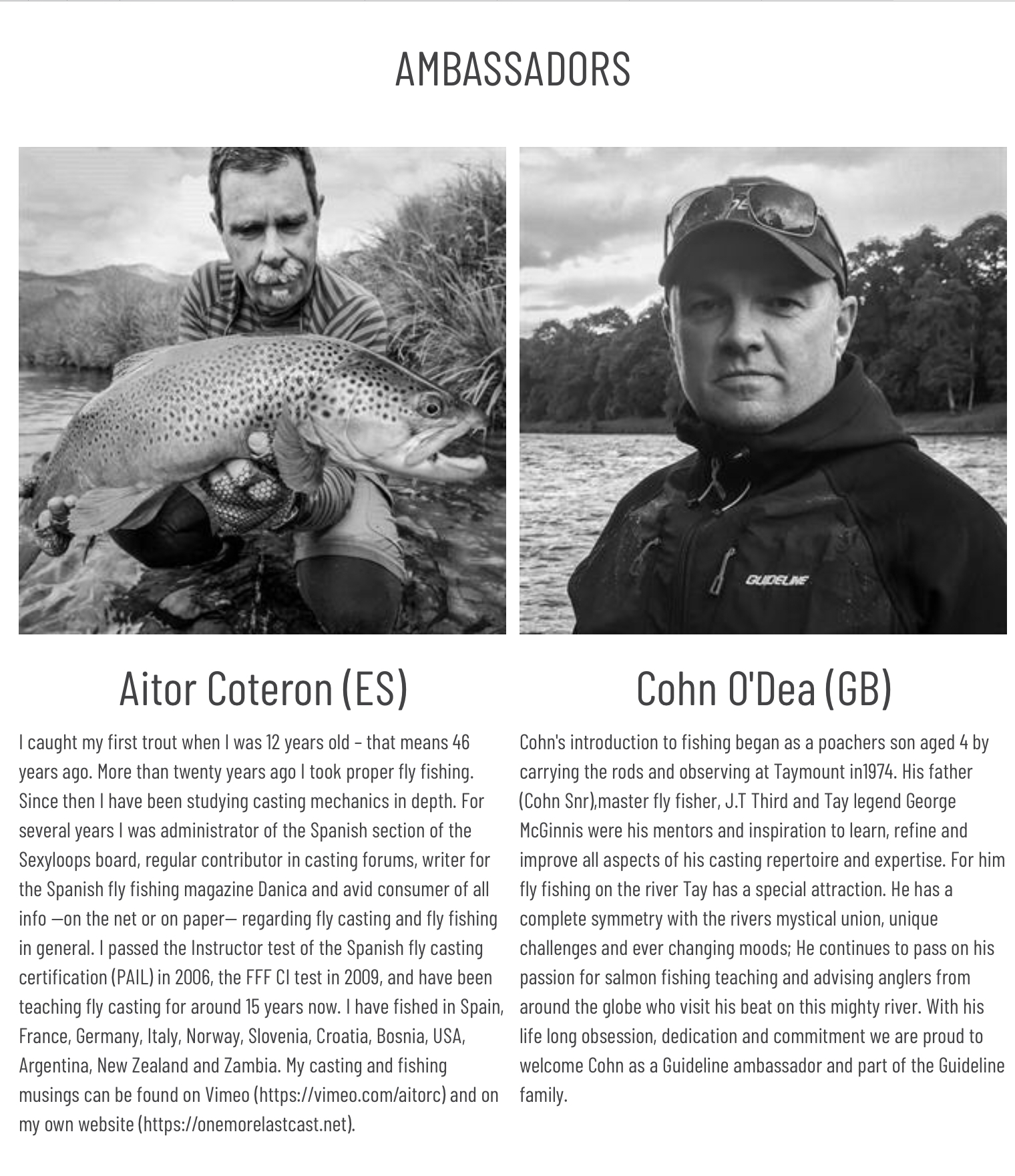
What we talked at the time has just been made public: I am a Guideline Ambassador! 😎
This news has been both a surprise and a honor. Many thanks to the whole Guideline team, and particularly to Chris, for counting on me on this project.

Letting the Rod Do the Work?

“—Let the rod do the work!

This familiar casting advice suggests that it is the rod that does the work in casting. What is more accurate to say is that in order to get more out of your fly rod, you, the caster, must learn to work more efficiently.”

Al Kyte