Secret Desire

“If you ask fly fishing guides what is the one thing that they would like their clients to be able to do better in order to catch more fish, the answer is not that they could tie better flies, tie better knots or owned better equipment. It is resoundingly that they should cast better.
If you ask fly casting instructors what is the one thing that they wish that their clients would do better, the answer is not that they read more books, watch more videos or even that they have more lessons (although that can help!). It is that they practice more.”

Paul Arden
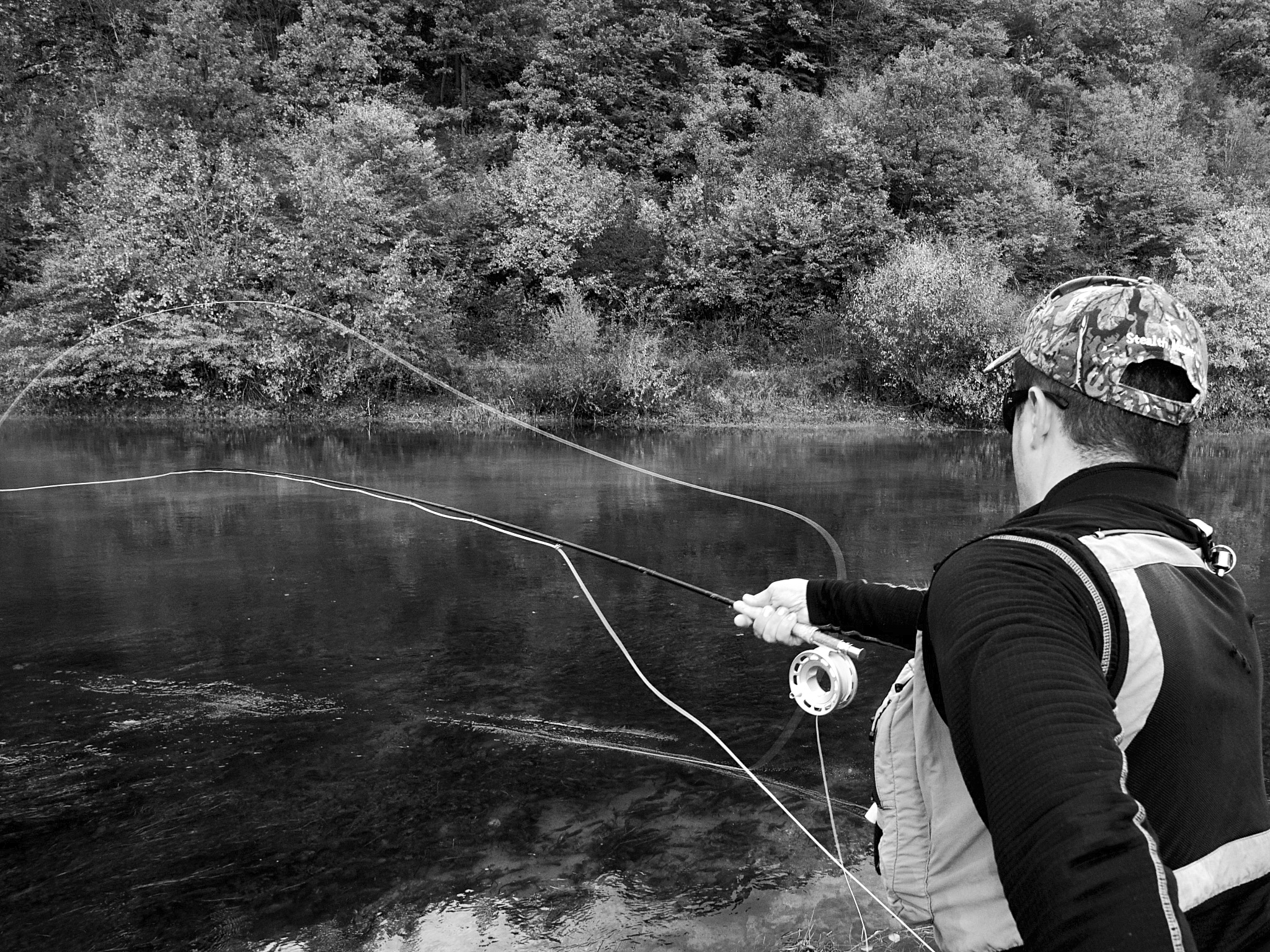
Jason on the importance of good casting technique

“I have yet to fish anywhere and say to myself, “Self, you are just too good at casting.”
Give me a great caster who has never fished and we’ll still be able go forth and conquer. Give me a short-line-only angler who can’t cast and I’ll happily take him tarpon fishing, just for the LOLZ.”

Jason Borger

A Big Asset

“This is something that brings a lot of people into our sport these days. They were surfing, they were sailors, they were doing this and that, and this and that, but still they come here and say:

—You know what my problem is? I was surfing in blablabla and was still thinking about my business. I hope to get rid of this in fly fishing.

And this is certainly true, this is one of the big assets of our sport.
Because we have a very technical aspect: casting. It’s impossible to make a difficult cast and think about your work back home. It’s just impossible. Good thing.”

Jean-Pierre Vollrath


¿Cañas Spey?

Ninfeando con caña de una mano y lances Spey

Hasta hace diez o doce años, cuando alguien que se iniciaba en la pesca a mosca se compraba una caña se podía estar casi seguro de que sería una 9’ #5. Si había que hacerse con un repuesto podría ser una 9 pies de un número menos o de un número más, para cubrir alguna situación distinta.

Con el tiempo el mercado se fue saturando peligrosamente… ¡y llegó al rescate la pesca a ninfa al hilo! Fue una bendición, porque de la clásica caña 9’ #5 hemos pasado a todo tipo de medidas que van desde los 9’6” a los 11’, con numeraciones desde #1 a #3 o #4. El mercado de las cañas que fueron “tradicionales” ha caído en picado. Como me decía un importante distribuidor hace unos años:

Ha venido Chris Rownes a ofrecerme distribuir su nueva Guideline Fario CRS, ¿pero a quién coño le voy a vender una caña de 9 pies?

Continue reading

Guideline Spey 2018

90AF57AD-B650-4743-B1D0-891AFD25205D

Tengo el placer de anunciar el primer encuentro Guideline dedicado a la técnica Spey. Este evento nace con vocación de periodicidad anual, y pretende reunir a todos los aficionados a la pesca con mosca que sientan curiosidad sobre las técnicas Spey —tanto para cañas de una mano como de dos— y quieran asesorarse en directo con reconocidos expertos en la materia.

Continue reading

Yes, It Is About Fishing

Does she fish or just cast (beautifully)? It would be interesting to see if all that technical casting ability also amounted to catching ability.

I read the comment above in a forum the other day. It is in reference to Maxine McCormick’s amazing casting prowess —Maxine is a 14 year old girl with several world records in fly casting under her belt!!

Maxine

I have heard that argument many times before around here. In my view it misses the point because the question that matters is:

If my technical ability were as good as that of Maxine, would it improve my catching ability and my overall enjoyment of fly fishing?

And the answer is YES, ABSOLUTELY!!!

Lee Wulff on short rods

”Another factor of importance I knew because I was a pilot. Add three inches to a six-foot-long propeller and you’ll reduce the revolutions per minute the motor will turn it at by least three hundred… Pushing a long rod through the air takes more effort than pushing a short one. I ran tests and found I could get 25 percent more speed at the fly using a six foot rod than I could with one that was nine feet long.”

Lee Wulff


I like to browse through the books in my library now and then, and today it has been the turn of Lee Wulff’s Trout on a Fly, published in 1986. Lee was famous for using six foot rods for atlantic salmon… and being very good at catching them. I underlined the quote above more than sixteen years ago, when I did my first read of this fine work.

Lee’s statement was one of the first casting mechanics issues I started to analyze as an would-be casting geek. Unfortunately Lee doesn’t explain what those tests he mentions were, but something seems to be wrong.

Continue reading

Casting Is Counterintuitive

“A good fly cast is counterintuitive. Our natural tendency is to wave the rod through a wide arc when casting. Perhaps the most challenging part of the cast is resisting the temptation to do this. In the beginning you’ll have to “stop short”, particularly during the backcast. In most casting, doing less with the rod usually means getting more from the cast.”

Macauley Lord