
Continue readingBridges are very special places for anglers; who could pass by without taking a look? Approaching one always fills your heart up with expectations
Continue readingBridges are very special places for anglers; who could pass by without taking a look? Approaching one always fills your heart up with expectations
“I’d recommend any aspiring MCI to read everything they can get theirs hand on, and then question every single thing in those publications, and work out if it is true or not. I haven’t read a single book without faults… but even in the worst books I have found gems worth pondering about.”
Lasse Karlson

Nueva Zelanda; un río de orillas altas —hasta unos dos metros por encima del agua— en un tramo salpicado de pequeñas entradas a modo de “bahías” de agua calma. Chris —nuestro guía— le señala una buena trucha a mi compa; éste lanza y… la espanta.
Es mi turno. Llegamos a otra pequeña entrada de agua, poco profunda y muy parada, ocupada por una trucha que patrulla despreocupada rompiendo la superficie suave y esporádicamente; lo que sea que se haya quedado atrapado allí es comida fácil. La trucha está dándonos la cola.
—¡Presenta ya! —me dice Chris, y la mosca vuela de inmediato al medio del pocete.
Continue reading
Este reciente artículo de Paul Arden es muy interesante, así que le he pedido permiso para traducirlo y publicarlo aquí. ¡Gracias Paul!
A continuación voy a describir el método que empleo cuando pruebo una caña de mosca por primera vez. Es una rutina que llevo a cabo con cada caña, y que he estado usando durante los últimos veinticinco años.
Habando desde el punto de vista de años de experiencia en la venta de cañas —tanto las de mi propio negocio como para otros fabricantes y distribuidores— puedo asegurar que muy poca gente hace algo que sea ni remotamente similar. La gran mayoría de los pescadores hace lances falsos con doce o catorce metros de línea y poco más; en alguna ocasión se puede ver algún lance de distancia. Si esto que comento te resulta familiar quizás lo que viene a continuación pueda serte de ayuda.
Continue reading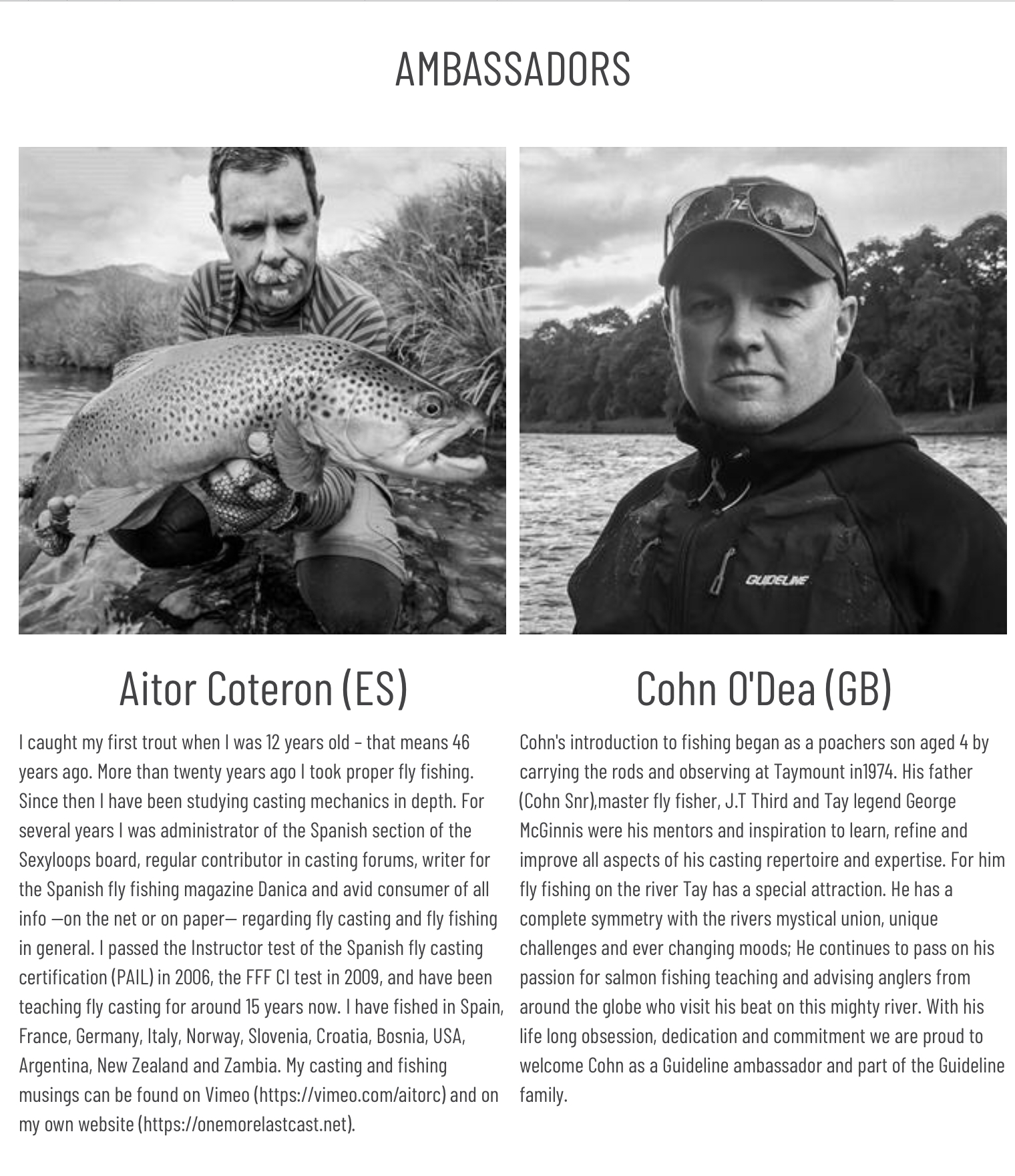
About two months ago I received a private message from Christopher Rownes. Chris is a world class fly caster and instructor, and his extremely elegant style has always been an inspiration to me (http://www.christopherrownes.com/videos.htm).
What we talked at the time has just been made public: I am a Guideline Ambassador! 😎
This news has been both a surprise and a honor. Many thanks to the whole Guideline team, and particularly to Chris, for counting on me on this project.
“If fly casting is about the rod loading/unloading, and therefore impulsing the line by transferring its potential energy to it… shouldn’t the Bow and Arrow cast be the distance technique of choice?”
The Technocrat
“—Let the rod do the work!
This familiar casting advice suggests that it is the rod that does the work in casting. What is more accurate to say is that in order to get more out of your fly rod, you, the caster, must learn to work more efficiently.”
Al Kyte
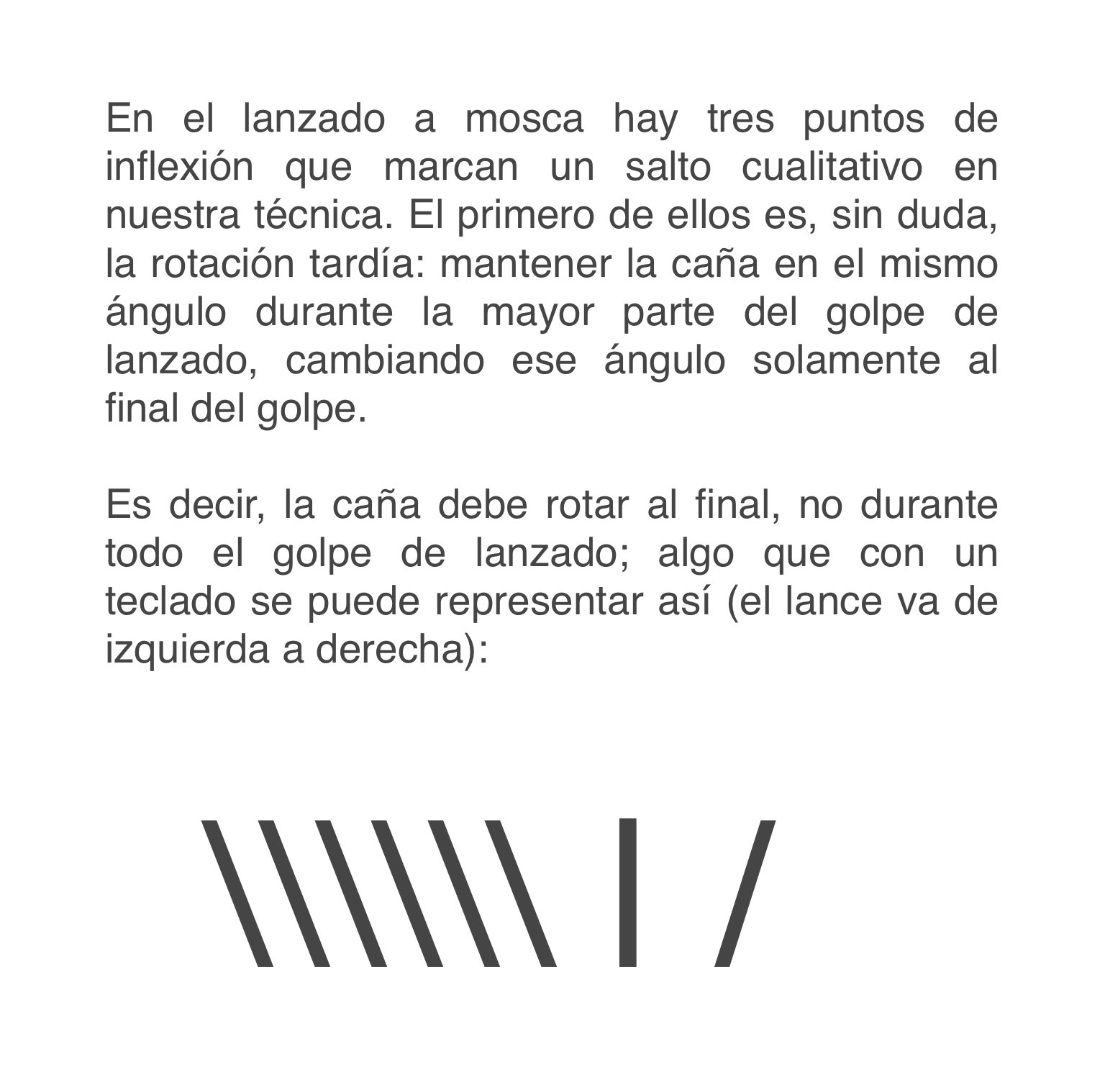
“The longer the distance the rod travels on the back and forward casting strokes, the less effort is required to make the cast.”
Lefty Kreh
There is more to casting than a mere turn over of the rod. By enunciating this important principle Lefty was giving —probably inadvertently— due consideration to the capital role of translation in a casting stroke.

I started studying fly casting reading the classics: Mel Krieger, Joan Wulff and Lefty Kreh. I still enjoy to re-reading their books.
More than twenty years after, seeing a quote from me beside one from Lefty is, simply, amazing.
Thanks, Jason.
 onemorelastcast.net